Coffee wakes you up, that much is clear. That it can also care for the skin is more surprising. Yet caffeine is one of the most widely used actives in cosmetics, and this choice is based on concrete properties. Here is, without exaggeration, what coffee really brings to the skin.
A meeting born of a memory
Before becoming an active ingredient, coffee is an intimate story for the house. The Terre de Mars signature has its origins in the memory of our founder Poulad and his grandmother, who wrapped herself in coffee grounds as part of a skincare ritual. This family memory met cosmetic science, and from that encounter coffee based cosmetology was born.
Action 1: a recognized antioxidant
Caffeine is a source of antioxidants. Antioxidants help the skin defend itself against free radicals, those unstable molecules generated by pollution, the sun, or stress, and linked to premature aging. Adding an antioxidant active ingredient to a routine means supporting the skin's natural defenses.
Action 2: an effect on microcirculation
Caffeine is known for its action on microcirculation. This property explains its preferred use around the eye area, where it helps reduce the look of puffiness linked to fluid buildup on waking.
We explore this application in our dedicated article on dark circles and puffiness.
Action 3: natural exfoliation through the grounds
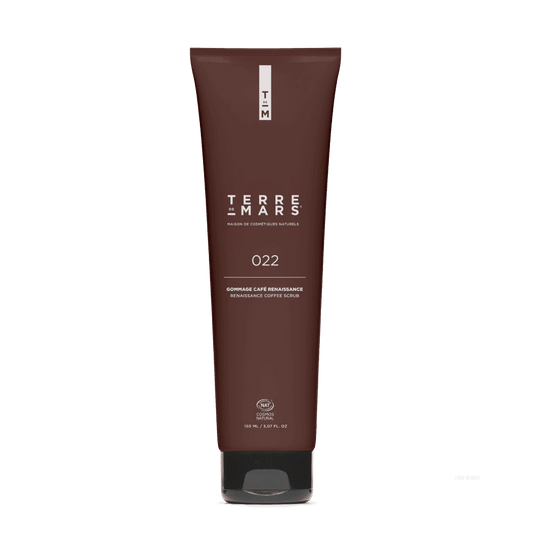
In the form of ground coffee, the grounds become a natural exfoliant. It helps gently remove dead skin cells and surface impurities, leaving skin smoother and more radiant. This property is at the heart of our exfoliating treatments.
Action 4: a sensory quality that anchors the ritual
The effectiveness of a treatment also depends on the desire to use it. Coffee's scent and unique texture turn a practical step into a moment of pleasure. This sensory dimension, hard to measure but very real, encourages consistency, and consistency makes the difference over time.
Action 5: a raw material that supports eco-design
Coffee also offers a virtuous path on the ingredient side. Coffee grounds, considered waste, can be repurposed as a cosmetic active ingredient. This reuse logic places coffee within a responsible approach, beyond its skin benefits alone.
We tell this journey from waste to active ingredient in our article on recycled coffee grounds.
What coffee does not do
To be honest, it is also important to mention the limits. Caffeine is not a miracle solution. It does not erase hereditary dark circles, does not replace sunscreen, and does not work in a single application. Its value lies in real properties, used in well-formulated products and applied consistently.
Discover our ingredients
To discover all the active ingredients that accompany coffee in our formulas, browse our ingredients page.